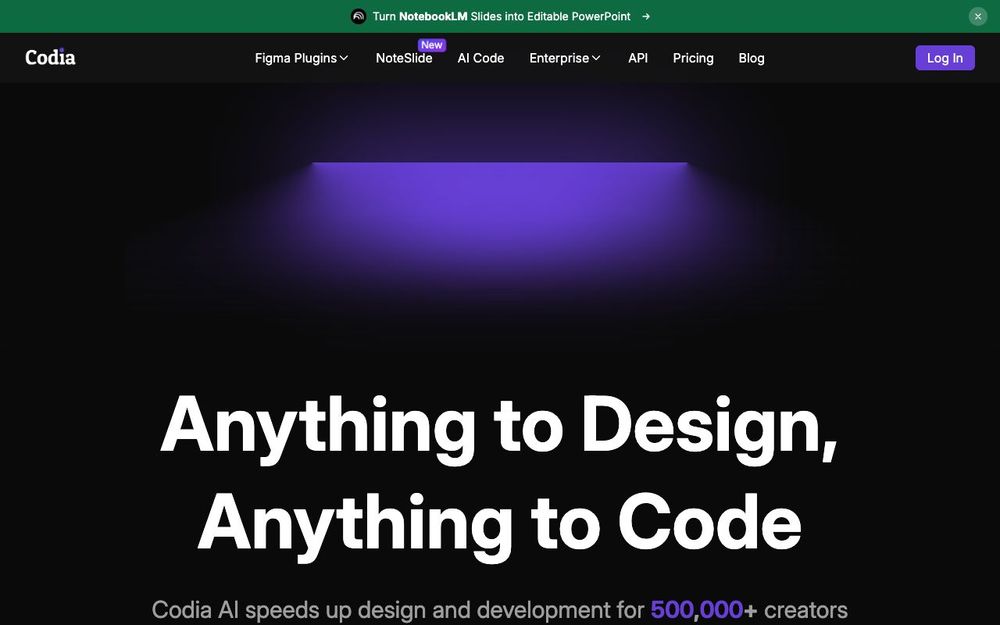
Codia AI is a sophisticated AI-driven development tool designed to bridge the gap between UI/UX design and front-end engineering. By leveraging deep learning and computer vision, it automates the conversion of Figma designs into clean, maintainable code including React, Vue, HTML/CSS, Flutter, and Swift UI. The platform focuses on generating 'human-like' code structures that respect layout hierarchies and responsiveness, significantly reducing the manual effort involved in slicing designs and writing boilerplate CSS/HTML. It operates as a Figma plugin and a web-based platform, offering high-fidelity conversions that preserve design integrity while ensuring technical performance.

Codia AI
An advanced AI-powered design-to-code platform that instantly transforms Figma designs into high-quality, production-ready code for web and mobile applications.
Product Introduction
What is Codia AI?
Key Features
AI-Powered Design-to-Code
Automatically converts Figma frames into production-ready code with high accuracy.
Multi-Framework Support
Generates code for a wide array of frameworks including React, Vue, Tailwind CSS, Flutter, Swift UI, and Android (XML/Compose).
Intelligent Layout Recognition
Uses advanced algorithms to understand Auto Layout, Flexbox, and complex nesting, ensuring responsive designs across all screen sizes.
Real-time Preview
Features a side-by-side preview window where developers can inspect the generated code immediately after selecting a design element.
Asset Optimization
Automatically extracts and optimizes images, icons, and SVG assets, providing them as ready-to-use resources within the code package.
Developer-Friendly Syntax
Produces readable, modular, and standard-compliant code that follows industry best practices rather than cluttered, machine-generated junk.
Use Cases
Rapid Prototyping for Startups
Engineering teams can turn high-fidelity Figma prototypes into functional web frontends in minutes to secure investor feedback.
Bulk UI Component Migration
Large-scale enterprise migrations where design systems in Figma need to be translated into a new tech stack like Tailwind CSS or Flutter.
Cross-Platform Mobile Development
iOS and Android developers can use the same Figma source to generate native SwiftUI and Jetpack Compose code simultaneously.
Marketing Landing Page Deployment
Digital agencies can accelerate the delivery of pixel-perfect landing pages by bypassing the manual HTML/CSS slicing phase.
Frequently Asked Questions

Alternatives of Codia AI
No alternatives found yet.