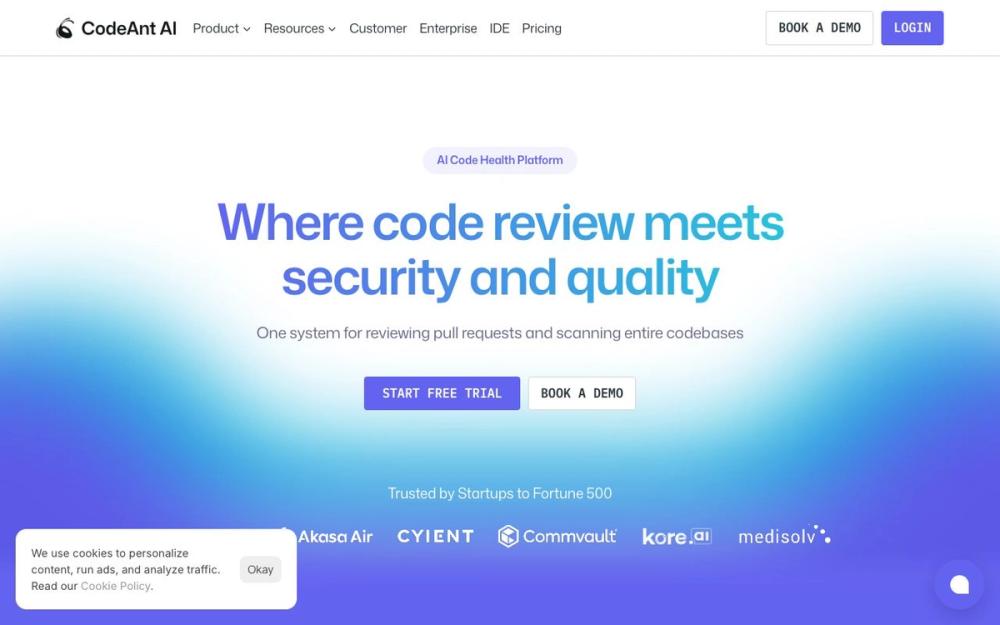
CodeAnt AI is an automated code review and security platform that uses AI to identify bugs, security vulnerabilities, and technical debt in real-time.
No alternatives found yet.
CodeAnt AI is a comprehensive AI Code Health Platform designed to unify code review, security, and quality analysis into a single automated workflow. It integrates directly with major version control systems like GitHub, GitLab, and Bitbucket to perform line-by-line analysis of pull requests. The platform utilizes advanced Large Language Models (LLMs) and static analysis engines to not only identify issues such as OWASP vulnerabilities and code smells but also provide auto-generated pull requests to fix them. With SOC 2 and HIPAA compliance, it ensures that your code remains secure without permanent storage on their servers, providing an enterprise-grade solution for modern development teams.
Automates the review process with in-line comments and AI-generated PR summaries, reducing manual review effort by up to 80%.
Continuously scans for security vulnerabilities based on OWASP and CWE standards, offering one-click remediations for critical flaws.
Automatically identifies and flags hardcoded API keys, passwords, and sensitive tokens before they are committed to the repository.
Monitors for infrastructure drift and cloud misconfigurations directly within the CI/CD pipeline to ensure deployment safety.
Enables engineering leads to block merges that do not meet specific coverage, complexity, or quality thresholds.
Provides a centralized dashboard with real-time visibility into engineering velocity, throughput, and code health trends.
FinTech engineering teams can utilize CodeAnt AI to automatically enforce security policies and generate audit-ready compliance reports for external regulators.
Large enterprise teams can perform full-repo scans to identify and automatically refactor deprecated patterns, dead code, and high-complexity functions.
Fast-growing startups can deploy CodeAnt AI as an automated senior reviewer to maintain high code standards across distributed teams without slowing down release cycles.